Nelson's Touch
2025-11-01
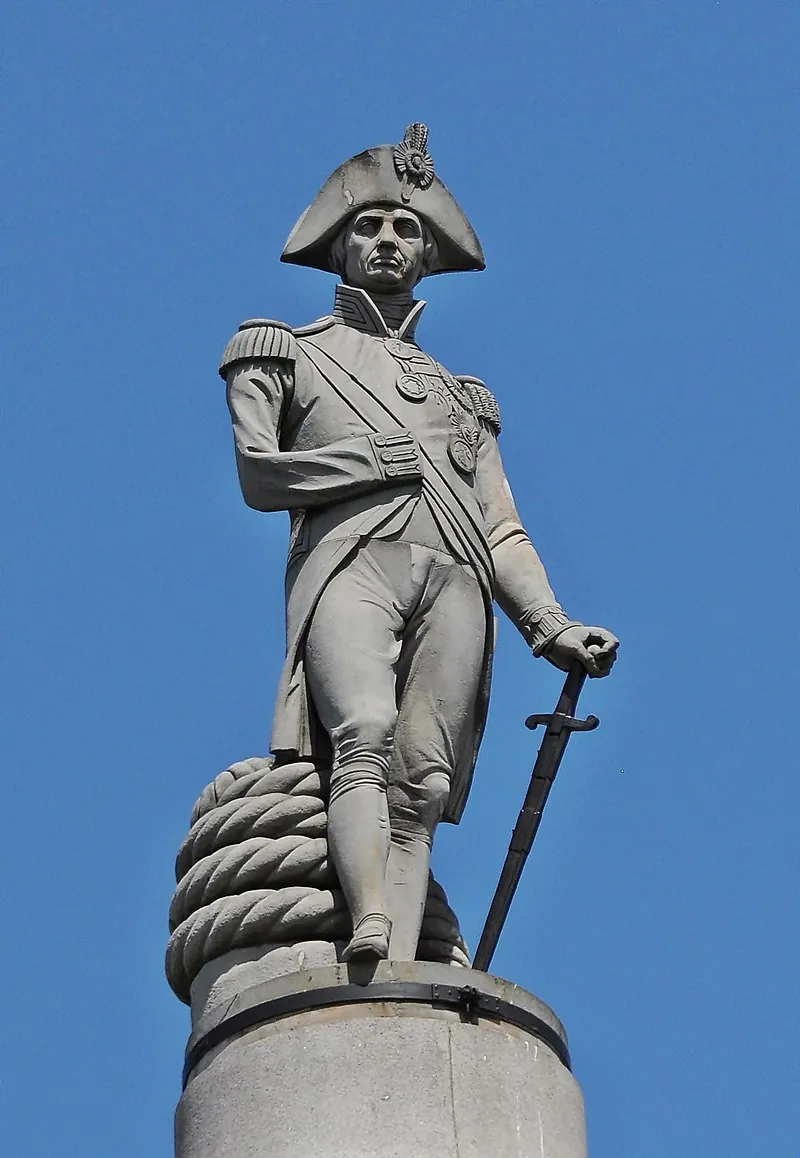
Everyone in tech seems to love Napoleon. I think the more useful lessons about scaling a company come from his naval nemesis, Horatio Nelson. What he did out there kept Britain on top of the world’s oceans for more than a hundred years after he was gone.
The Battle of the Nile
In 1798, a storm off Sardinia destroyed Nelson’s frigates. For two months he searched for Napoleon’s invasion fleet without reconnaissance. He passed them in the dark. Reached Malta after they had taken it and left. Arrived at Alexandria on June 28th, found nothing, and sailed away. Napoleon landed three days later.
When Nelson finally caught the French fleet at Aboukir Bay on August 1st, what was to become the Battle of the Nile began at sunset and continued into darkness. Ships fought by muzzle flash. Smoke made signals impossible. Around 10 PM, L’Orient, the French flagship, caught fire and exploded, lighting the bay for fifteen minutes before plunging it back into darkness. Fighting continued until 3 AM.
Nelson took shrapnel to the head early in the battle and was carried below deck, blinded by blood. His captains fought through the night without signals, orders, or their commander. Yet they captured or destroyed eleven of thirteen French ships, a winning rate unprecedented in naval history until Trafalgar.
Blinded and below deck, Nelson couldn’t communicate during the battle. He had done that work long before it started.
Dinner, Then the Plan
Nelson used to have his captains over for dinner before a big battle. They’d eat, and then they’d spend hours going over what they were going to do. He asked the hard questions himself. What if the wind shifts. What happens if the French won’t come out and fight. What if the line falls apart in the dark and nobody can see the ship in front of them.
The captains argued back. They’d suggest other ideas, catch the problems he’d missed, and every so often they talked him out of something. When they didn’t, he’d keep the plan but explain why he wanted it that way, so everyone left dinner knowing how he thought about a fight. The plan itself mattered less than getting his thinking into their heads, so that when something came up that nobody had planned for, they could still make a good guess about what he’d want.
It worked at the Nile. Captain Foley had the lead ship, Goliath. As they came up on the French line in Aboukir Bay, Foley saw there was enough water to sail between the French and the shore and hit them from both sides. Nobody had told him to do that. He did it anyway, and the ships behind him followed him in.
They knew by then that Nelson would back the captain who grabbed an opening over the one who sat waiting for orders.
The Circulating Order Book
He kept an order book too, and it went around the fleet from one ship to the next. Each captain read it, wrote his notes in it, and passed it on. It didn’t say much about procedure. Mostly it explained why he did things the way he did.
Take close fighting. Up at point-blank range the French edge in numbers didn’t count for much, and it came down to which crew could load and fire faster. The British had drilled so hard they got off two or three shots for every French one. So the book told a captain who’d lost the signals to just pull up next to the closest French ship and start firing.1 A captain who understood the reason behind that wasn’t following a script. He was carrying a bit of Nelson’s judgment around with him, free to use it however the moment called for.
He put almost the same line into his Trafalgar Memorandum a few years later: “In case signals can neither be seen nor perfectly understood, no Captain can do very wrong if he places his ship alongside that of an enemy.”2 A captain could hold onto that and act on it with no flags flying and nothing to see through the smoke.
Propagated Judgment
So the whole setup took it for granted that the signals would fail, and tried to make sure the fleet could fight anyway when they did. The dinners got the captains used to how he thought, and the reasons all went into that order book. Then at Trafalgar he put himself on Victory, 104 guns, in about the worst spot in either column, out front of the line that was going to punch through the French. His officers asked him to move his flag back to a safer frigate. He wouldn’t do it.
Part of it was simply that he was out there in the same danger, not watching from somewhere safe. And he had this habit of eating the blame himself when a thing went wrong while pushing the credit down to whatever captain had actually pulled it off. I think that’s most of why they kept fighting once the flags were useless to them.
Most managers I’ve worked with do the opposite the moment things start to slip. They add process. They add another check-in, another approval step, and the team slows down, but at least someone feels like they’re in control now. The trouble is that if you run a company long enough you hit Nelson’s situation eventually. The comms drop and the team either keeps going or it stalls out waiting for a decision from above that never lands. Most stall. His people didn’t, and there’s nothing clever about why. He spent years picking those captains and hashing things out with them until they more or less thought like he did.
Which is really the test. Take off for a month. Do you come back to a team that kept making good calls on its own? If not, there’s no quick fix that I know of. You have to sit down with the people who’ll be stuck without you and actually walk them through your thinking, not just the call you made. An offsite won’t do it. It’s slower than that. You say the same few things over and over, a little differently each time, the way that order book went around the fleet, until one day they hold up and you’re not needed in the room.
On the circulating “public order book” and Nelson’s doctrine of close action, see “Nelson and Trafalgar,” The Past; the Navy Records Society edition of Nelson’s Public Order Book in The Naval Miscellany, Vol. VI; and N.A.M. Rodger, The Command of the Ocean: A Naval History of Britain, 1649-1815 (2004).
Trafalgar Memorandum, October 1805, in Nicholas Harris Nicolas, ed., The Dispatches and Letters of Vice Admiral Lord Nelson, Vol. VII (1846).