Nelson's Touch: Lessons for Scaling Organizations
2025-11-01
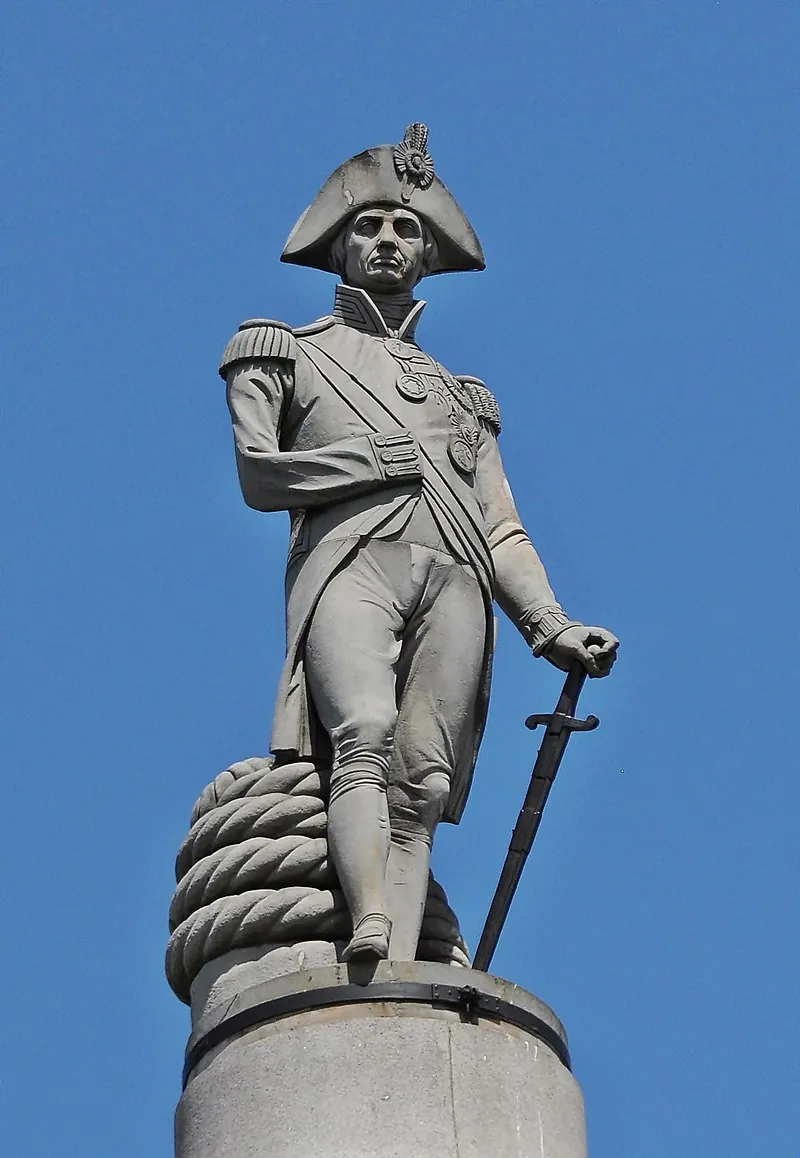
Silicon Valley fawns over Napoleon. The better lessons on scaling startups come from Bonaparte’s naval nemesis, Horatio Nelson.
Nelson is history’s most celebrated naval commander, and the reason has less to do with tactics than with what happened when his signals couldn’t reach his captains. His triumphs at sea anchored British supremacy on the world’s oceans for more than a century beyond his lifetime.
The Battle of the Nile
In 1798, a storm off Sardinia destroyed Nelson’s frigates. For two months he searched for Napoleon’s invasion fleet without reconnaissance. He passed them in the dark. Reached Malta after they had taken it and left. Arrived at Alexandria on June 28th, found nothing, and sailed away. Napoleon landed three days later.
When Nelson finally caught them at Aboukir Bay on August 1st, what was to become the Battle of the Nile began at sunset and continued into darkness. Ships fought by muzzle flash. Smoke made signals impossible. Around 10 PM, L’Orient, the French flagship, caught fire and exploded, lighting the bay for fifteen minutes before plunging it back into darkness. Fighting continued until 3 AM.
Nelson took shrapnel to the head early in the battle and was carried below deck, blinded by blood. His captains fought through the night without signals, orders, or their commander. Yet they captured or destroyed eleven of thirteen French ships, a winning rate unprecedented in naval history until Trafalgar.
Nelson obviously couldn’t communicate during that battle. The question is what he’d communicated beforehand.
Dinner, Then the Plan
Before major battles, Nelson gathered his captains for dinner, then spent hours working through the plan. Not briefing them. Working through it together. “What if the wind shifts?” “What if they refuse to engage?” “What if we lose formation?”
Captains argued, suggested alternatives, pointed out problems. Sometimes Nelson changed the plan. Sometimes he kept it but explained his reasoning. He wanted them to see how he thought about naval combat so that when something unexpected happened, they’d know what he’d prioritize.
At the Nile, Captain Foley commanded Goliath, the lead ship. As the British approached the French line anchored in Aboukir Bay, Foley spotted enough depth to sail between the French ships and shore. This would trap the French in crossfire from both sides. It wasn’t in the plan. Foley did it anyway. The ships behind him followed his lead.
They had learned that Nelson valued aggressive initiative and exploitation of opportunity over rigid obedience. When conditions changed, they adapted in ways consistent with his thinking.
The Circulating Order Book
To reinforce this, Nelson kept a circulating order book that passed from ship to ship. Each captain read it, annotated it, and passed it along. The book explained reasoning, not procedures.
“I prefer close-quarters engagement,” he wrote, “because it neutralizes their superior numbers by making battles about crew quality, not firepower. When you can’t see my signals, engage the nearest enemy ship as closely as possible.” Rigorous training let British ships fire two to three times faster than the French.
By giving his captains the logic behind his preferences, he made them independent extensions of his judgment. His orders were principles, not scripts.
That same clarity appeared in his Trafalgar Memorandum: “In case signals can neither be seen nor perfectly understood, no Captain can do very wrong if he places his ship alongside that of the enemy.” It was simple, memorable, and actionable. Guidance designed to outlast the failure of communication itself.
Propagated Judgment
Nelson’s machine ran on propagated judgment under guaranteed communication failure: working sessions taught captains how he reasoned, the order book documented why rather than what, and at Trafalgar he commanded from Victory, a 104-gun ship leading one of two columns piercing the enemy line, the most dangerous position in the fleet. His officers begged him to transfer his flag to a safer frigate. He refused. By sharing the risks his captains faced, he made conviction cheaper than caution; by taking the blame for failures and giving them the credit for successes, he kept them moving when the signals wouldn’t come. Most leaders respond to coordination failures with more rules and more oversight, trading speed for the appearance of control. In fast-moving environments, delay is as dangerous as confusion.
Every scaling org faces the question Nelson answered at the Nile: when the signals fail, does the system hold, or does it wait for a signal that will never come? Most will wait. Nelson’s system worked because he spent years selecting and training the people inside it. The test is simple: could you take a three-month leave and come back to an organization that made good decisions without you? If the answer is no, the system runs on your presence, not your judgment, and your judgment dies the moment you are unavailable.